How SaaS Applications Are Moving from User-Centric to Agentic-Centric
We are now standing at the edge of a shift that feels as significant as the move from on-premise to cloud. We are moving away from building software that waits for a user to click a button, towards software that takes over the work itself. We are moving from user-centric tools to agentic-centric systems that operate on our behalf.
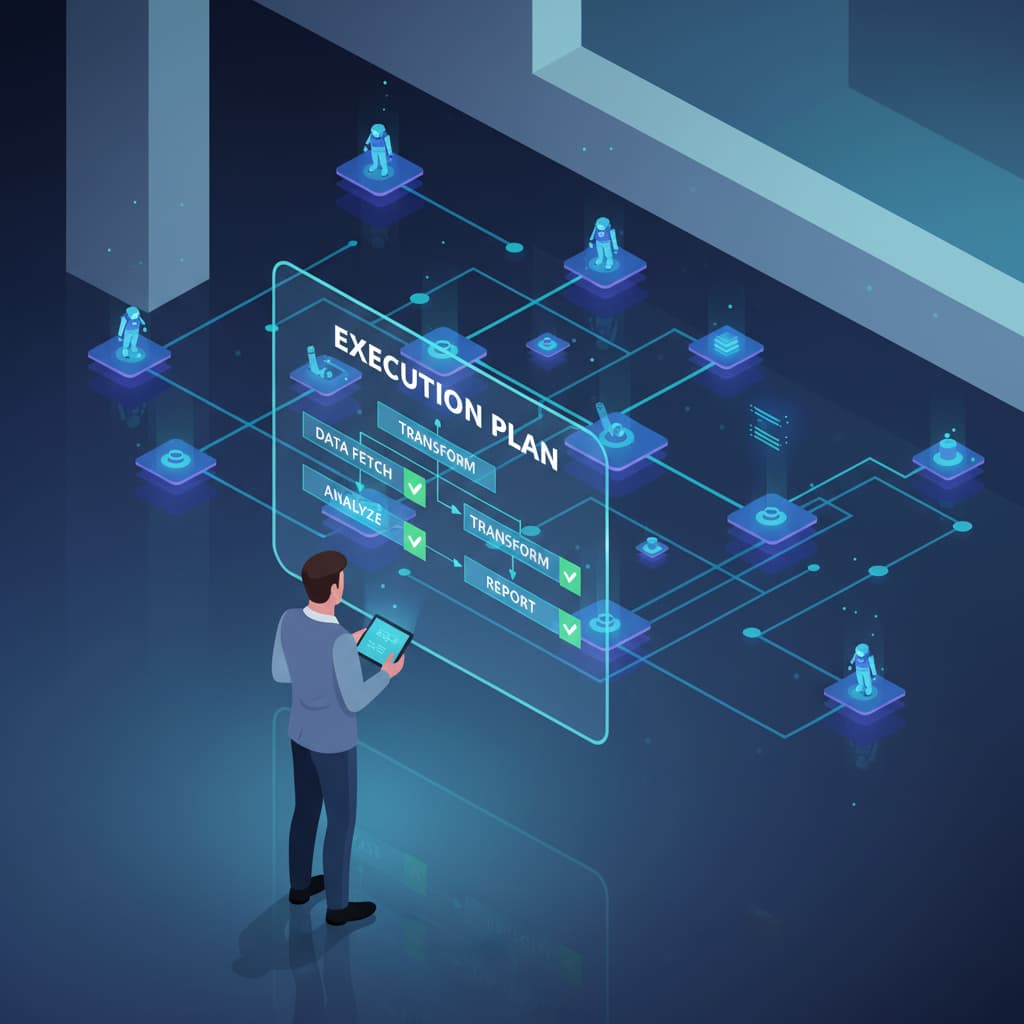
For the last decade, we have been building digital hammers. Every B2B SaaS tool on your tab bar is essentially a high-fidelity interface designed to help a human perform a specific manual task faster and still relies heavily on human glue. We’ve built beautiful dashboards, complex forms, and endless configuration screens. But look closely at any power user’s workflow, and you’ll see they’ve become "digital couriers." They spend their days fetching data from one tool, massaging it in a spreadsheet, and manually kicking off a process in another.
We’ve reached a point of diminishing returns with the traditional dashboard. The next evolution of SaaS isn’t about making the hammer lighter; it’s about building software that takes over the swing.
Consider a typical production incident. In a user-centric tool, the system alerts you to a spike in 500 errors, but you still have to log in, interpret the dashboard, and manually toggle the feature flag. In an agentic system, the software detects the error spike, identifies the correlating feature flag, and disables it autonomously, only notifying you to review the postmortem.
We are moving from user-centric tools to agentic-centric systems that operate on our behalf
From User-Centric to Agentic-Centric: What It Really Means
In a user-centric world, the application is passive. It waits for a click, a hover, or a form submission. The human is the "doer," holding the entire mental model of the goal and driving every micro-action to get there. Even our best "automation" features are usually just rigid if-this-then-that recipes.
Agentic-centric software flips the script. These systems are designed to understand a high-level goal, decompose it into a series of logical steps, and execute those steps autonomously. In this model, the user’s role shifts from a "doer" to a "director" or "supervisor". You set the objective and review the outcomes rather than managing the keystrokes.
Consider a standard reporting task. Today, a user exports data from three different tabs, reconciles them in Excel, generates charts, and pastes them into a slide deck. In an agentic system, the user simply asks to "prepare the weekly performance report." The agent understands where the data lives, knows how to handle common discrepancies, and presents a finished draft. It only interrupts the user if it encounters a genuine anomaly it isn't authorized to solve.
Rethinking the Stack: How Agentic Systems Are Built
Building this isn't as simple as slapping an LLM API call onto an existing controller. It requires a fundamental departure from the request-response patterns we’ve spent years perfecting.
The Architectural Blueprint is Different
Most SaaS backends are stateless. A user clicks a button, a request hits a server, a database record is updated, and the user gets a 200 OK. Agentic systems, however, are inherently stateful and long-running. A goal might take minutes, hours, or even days to complete as the agent waits for external APIs, background jobs, or human approvals.
We are seeing a move away from simple CRUD towards durable execution frameworks like Temporal or Akka. These allow us to write code that survives process restarts and network failures, ensuring that if an agent is halfway through a complex deployment, it doesn't just "forget" what it was doing because a pod restarted. Event-driven patterns are no longer optional; they are the nervous system of the agent.
The New Core Components
Orchestration Engine
This is the heart of the system. It’s responsible for planning, tool selection, and error handling. It’s not a static workflow; it’s a dynamic loop that assesses the current state against the goal and decides the next best action.
State and Memory
Agents need more than just a session cookie. They require context across long intervals. This involves a hybrid approach: vector databases for semantic memory (understanding past context) and traditional relational databases for tracking the literal operational state of a task.
Toolbelt of APIs
An agent is only as good as its tools. We've realized that a huge part of "AI engineering" is actually just "good old-fashioned software engineering." We have to build robust, well-documented, and versioned internal APIs that the agent can call reliably. If your internal API is flaky, your agent will be too.
The New Ways of Working
This shift changes what we do as engineers every day. We are moving from being feature-builders to system-designers. The job is less about pixels and more about defining the "rules of the road" for autonomous actors.
Our responsibilities are shifting toward designing for fault tolerance in processes we can't easily debug with a single request ID. While prompt engineering is the current trend, the more durable skills involve building observability into black-box processes and creating the infrastructure that keeps agents within their guardrails.
Even our collaboration is evolving. The classic trio of product, design, and engineering is widening. We now work much more closely with domain experts to encode business logic directly into the agent’s parameters. Instead of asking "Where should this button go?", the conversation becomes "What should the agent do if the customer's budget is exceeded by 10%?"
UX for Agents: Trust, Transparency, and Control
This move towards autonomous, goal-driven systems creates a new and critical challenge: how do you design an interface for something that acts on its own? When the user’s role shifts from a “doer” to a “director,” the old paradigms of forms and dashboards (built for direct manipulation) become insufficient.
This is why the UI for an agentic system isn’t about adding more features; it’s about building trust. If the software is doing work for you, you need to know exactly what it’s thinking
- Transparency: We are replacing static forms with activity logs and execution plans. The user needs to see the "why" behind an action.
- Control: Users need clear levers to approve, reject, or undo actions. We have to design "human-in-the-loop" checkpoints that don't feel like bottlenecks.
- Feedback Loops: We need simple ways for users to correct an agent, where that correction actually improves the system's future logic rather than just fixing a one-time error.
Building Software That Works For Us
The agentic shift is changing the fundamental value proposition of SaaS from "a tool you use" to "a service that delivers an outcome". It’s a move from managing the workload to actually reducing it.
This transition isn't going to be easy. It brings up massive questions about reliability, cost, and accountability. But for those of us in the trenches, it’s an opportunity to move past the "dashboard fatigue" of the last decade. The teams that master building robust, observable, and trustworthy agentic systems are the ones that will define the next era of software.
Published by...

Amjad Khader
Visit author page